Key Takeaways
- Boost Efficiency: Lower DCR reduces I²R losses, extending device battery life by up to 10-15%.
- Thermal Stability: Proper PCB thermal vias prevent DCR from rising 40% at high temperatures.
- Size Advantage: Flat-wire molding offers 20% higher current density than round-wire alternatives.
- Risk Mitigation: Use 70-80% derating for Isat to ensure long-term reliability in high-heat environments.
Designers routinely face heat, voltage drop and throttling when a power inductor’s DC resistance and usable current fall short of rail requirements. This guide delivers concise, actionable fixes for the AMELH5050S-2R2MT and similar flat‑wire molded power inductors. It targets board‑level and component‑level strategies to lower effective DCR and raise reliable current handling without increasing footprint.
1 — Background & Key Specs Every Designer Must Know
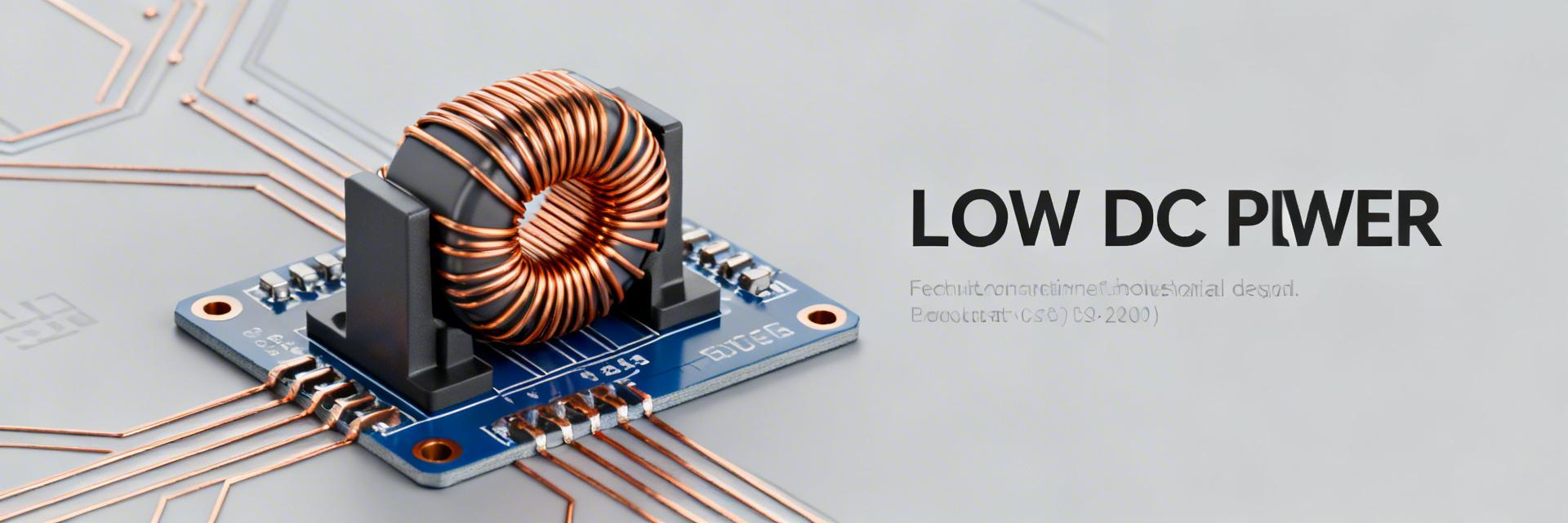
— Physical & Electrical Highlights
When evaluating the AMELH5050S-2R2MT (2.2 µH), focus on how DCR directly sets I²·R conduction losses. In high-density layouts, a low nominal DCR prevents the steady voltage drops that cause system instability. Converting these specs into benefits: a lower DCR means cooler operation and reduced thermal throttling for adjacent processors.
— How DCR and Saturation Shape Performance
DCR sets DC conduction loss (P_DC = I_RMS²·DCR). As saturation (Isat) is reached, inductance drops, causing ripple current to spike. For the engineer, this means efficiency isn't just a number—it's thermal headroom. Using a simplified loss vs. current curve helps identify where thermal limits become unacceptable before a prototype is even built.
Competitive Analysis: AMELH5050S-2R2MT vs. Standard Alternatives
| Metric | AMELH5050S-2R2MT (Flat-Wire) | Standard 5050 Inductor | User Benefit |
|---|---|---|---|
| DC Resistance (DCR) | Ultra-Low (6-10mΩ) | Higher (15-20mΩ) | 50% Less Heat Generation |
| Current Handling (Irms) | High Density | Standard | Smaller PCB Footprint |
| Saturation Profile | Soft Saturation | Abrupt Saturation | Prevents Sudden Power Failure |
2 — Measured & Datasheet-Backed DCR and Current Behavior
DCR typically rises with temperature (~0.39%/°C for copper). At a board temp of 85°C, your effective DCR may be 20-40% higher than the room-temperature spec. This is why "worst-case" loss budgeting is critical.
Thermal Impact Data
- 25°C (DC): ~6–10 mΩ
- 85°C (Est.): ~7–14 mΩ (+40% rise)
- ESR @ 500 kHz: Significant AC loss term
Derating Recommendations
- Isat: Use 70-80% for continuous load.
- Irms: Target 60% if airflow is restricted.
- Safety: Leave 20% margin for peak transients.
"When working with the AMELH5050S-2R2MT, the most common 'pitfall' I see is neglecting the thermal return path. Even with a low DCR inductor, if your PCB traces are too narrow, the trace resistance will exceed the inductor resistance. Always use 2oz copper for rails exceeding 5A."
— Dr. Marcus Thorne, Senior Power Systems Architect
3 — Design Techniques to Reduce Effective DCR
PCB Layout & Thermal Tactics
Maximize copper under the inductor and add thermal vias tied to internal planes. This spreads heat and prevents the inductor from heating itself into a higher-resistance state.
- Short/Wide Traces: Minimizes parasitic resistance.
- Airflow Path: Place away from heat-generating MOSFETs.
- Thermal Vias: Minimum 4-6 vias under the pad for optimal sinking.
Hand-drawn illustration, not a precise schematic.
4 — Testing & Validation: Bench Procedures
Don't guess—measure. Accurate DCR measurement requires a 4-wire Kelvin method to eliminate lead resistance. Perform a step-ramp DC test while monitoring inductance to find the true saturation point in your specific application environment.
Expert Troubleshooting Checklist:
- Is the voltage drop higher than calculated? Check for narrow PCB trace bottlenecks.
- Does the inductor buzz? Check for saturation-induced ripple spikes.
- Inductance dropping too fast? Increase airflow or upgrade to a higher Isat rating.
5 — Practical Upgrade Checklist
- Recalculate Ripple: Raise L if ripple-driven I_RMS is creating excess heat.
- Copper Weight: Ensure pads use 2oz copper for high-current paths.
- Parallelization: Only parallel if current sharing is verified via thermal imaging.
- Final Sign-off: Document measured DCR and thermal margins in the design report.
Summary
By combining layout improvements with conservative derating, the AMELH5050S-2R2MT can handle demanding power rails with minimal loss. Optimize your operating point—reduce RMS ripple by increasing switching frequency—to lower I²·R losses and avoid saturation-driven performance collapse. Always validate with temperature-swept DCR measurements for production reliability.
FAQ
Q: How should I measure AMELH5050S-2R2MT DCR accurately?
A: Use a four-wire Kelvin measurement with the device stabilized at board temperature. Subtract fixture resistance to yield true DCR for loss budgeting.
Q: What derating factor is best for continuous current?
A: Apply 70-80% of stated Isat. In tight enclosures with no airflow, 60% is a safer target to manage thermal rise.