Power designers often trade between usable current and DC resistance (DCR) when using compact molded inductors. This guide gives a prescriptive, data-driven workflow to push practical limits of the AMELH5030S-5R6MT while containing DCR-related I²R losses and thermal rise.
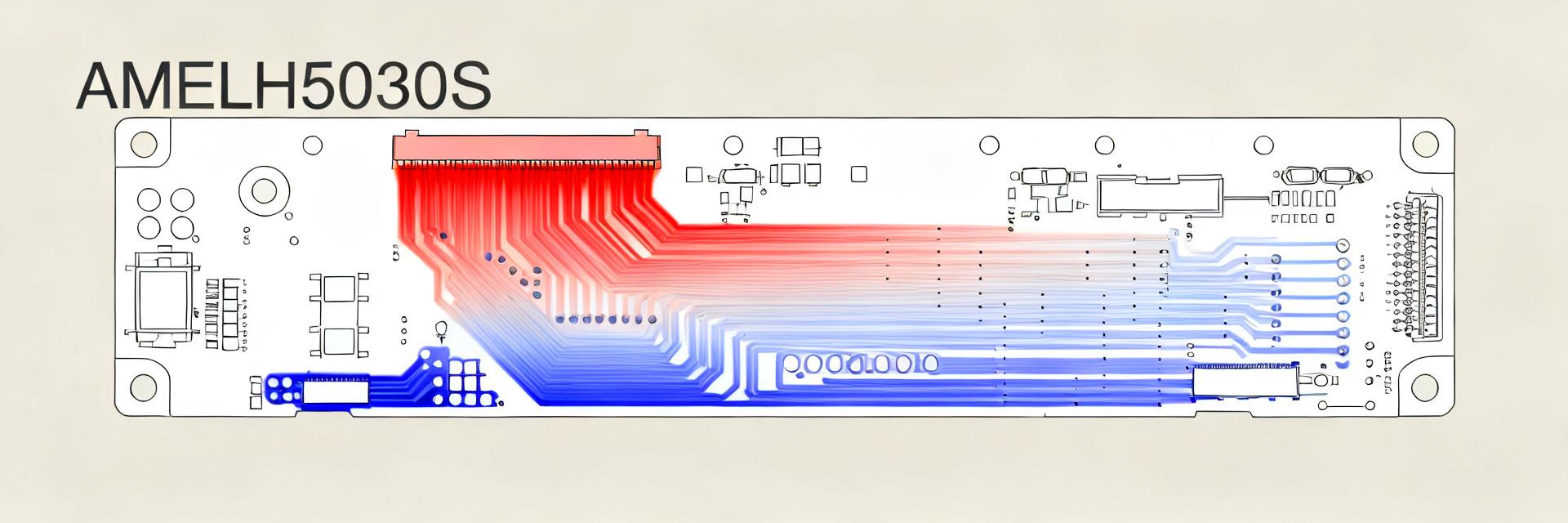
Product overview & electrical constraints (background)
The inductor nominal inductance, rated current types, DCR, and saturation current are the core specs to map into a converter. For example, inductance (5.6 μH) determines ripple amplitude at a given switching frequency; DCR sets I²R loss; "rated current" can mean temperature-rise rating or saturation threshold. When extracting datasheet values, record: inductance at 0 A, DCR at 25°C, saturation current (defined % drop), and temperature-rise current. In lab, confirm these values with Kelvin DCR and inductance vs. DC bias sweeps.
| Key Parameter | Baseline Value | Design Impact |
|---|---|---|
| Inductance | 5.6 μH | Sets ripple amplitude & switching frequency |
| DCR | ~Nominal (mΩ) | Determines resistive I²R heat loss |
| Isat | % Drop Threshold | Limits peak current handling |
Key electrical specs to map to system needs
Point: Identify which spec drives losses or limits current. Evidence: Inductance (5.6 μH) sets ripple; DCR sets resistive loss. Explanation: Use the datasheet to pull: inductance tolerance, DCR (Ω), saturation current (Isat at specified ΔL%), and temp-rise current. Actionable: create a one-line spec table per part, note measurement conditions, then plan Kelvin DCR at 25°C and L(I) sweep to chart saturation behavior.
Practical limits vs. datasheet numbers
Point: Real-world usable current is often lower than nominal. Evidence: Temperature, duty cycle, ripple, and PCB thermal path cause derating. Explanation: Apply conservative derating rules (e.g., continuous current ≤ 60–80% of saturation current depending on intended ΔT and duty cycle). DCR increases with temperature (~α·ΔT) so I²R losses rise during operation; include that in derating math. Actionable: define continuous-current spec as percent of Isat, and simulate temperature-dependent DCR when estimating steady-state loss.
DCR fundamentals and how it drives efficiency (data-analysis)
Understanding DCR starts with resistivity: R = ρ·L/A, where ρ is conductor resistivity, L is total conductor length, and A is cross-sectional area. Copper geometry and turns count set DCR; higher turns or thinner windings mean higher R. Losses scale as P = I_RMS²·DCR, so both RMS current and DCR determine heat.
Physics & Formulas
Worked example: with DCR = 15 mΩ and I_RMS = 10 A, P = 10²·0.015 = 1.5 W of copper loss—use this to predict ΔT via package thermal resistance.
Measuring DCR (Lab)
Use precision micro-ohmmeter or LCR with Kelvin leads. Report DCR at 25°C and provide thermal coefficient or measure at operating temperature.
PCB, thermal and mechanical tactics
PCB layout and copper strategies
Point: Copper is part of the inductor's thermal and electrical path. Evidence: Wider traces and via stitching reduce loop resistance and spread heat. Explanation: Recommend pad length to fully contact the package and place 6–16 thermal vias (0.25–0.35 mm drill) in the exposed pad area for medium power; use multiple layer stitching for high current.
Thermal management
Actionable items: measure top-surface and ambient with thermocouples, thermal-imaging for hotspots, and apply forced airflow if ΔT exceeds target; adjust BOM derating if worst-case ΔT reduces available current.
Electrical strategies to reduce effective DCR
Circuit-level trade-offs: Paralleling reduces series resistance; higher switching frequency lowers ripple amplitude but can raise core loss. Two identical inductors in parallel halve DCR if well balanced.
Actionable example: compare single 15 mΩ inductor vs. two 30 mΩ paralleled units—parallel pair seen from circuit is 15 mΩ but distributes heat across two packages.
Test case & verification plan
Verification Workflow:
- Prepare 5 samples soldered to representative PCB.
- Measure Kelvin DCR at 25°C.
- Perform DC current ramp in 1 A steps while logging top-surface thermocouple and ambient.
- Measure L vs. DC current to locate saturation point (e.g., 10% ΔL threshold).
Acceptance criteria: max ΔT ≤ 60°C, measured DCR within ±10% of datasheet, inductance drop
Summary Checklist
- ✔ Extract datasheet: inductance, DCR at 25°C, saturation spec, and temp‑rise rating.
- ✔ PCB & thermal: design wide short copper paths, add 6–16 thermal vias under pads.
- ✔ Electrical & test: perform steady-state current ramp with thermocouples and thermal imaging.
Frequently Asked Questions
How do I measure DCR of power inductor accurately?
Use a four-wire (Kelvin) micro-ohmmeter or precision LCR with Kelvin leads, a low-inductance fixture, and temperature control.
What is the best way to reduce DCR via PCB layout?
Lower series path resistance by maximizing copper cross-section—use wide traces or plane pours, short connections from pad to plane, and multiple thermal vias.
When should I parallel multiple inductors to raise current rating?
Parallel when a single inductor’s DCR or thermal limit prevents meeting current goals. Use matched-value parts and ensure low series imbalance.