Point: The approach emphasizes measurable steps—extract Rdc, tolerance and TCR, compute I2R losses, size copper, and run four-wire plus thermal tests. Explanation: Readers working on PC power rails, server distribution, or motor supply lines will get concrete templates and checkpoints to reduce risk and validate performance before production.
1 — Why AMELH5020S-1R0MT can be a fit for high-current rails
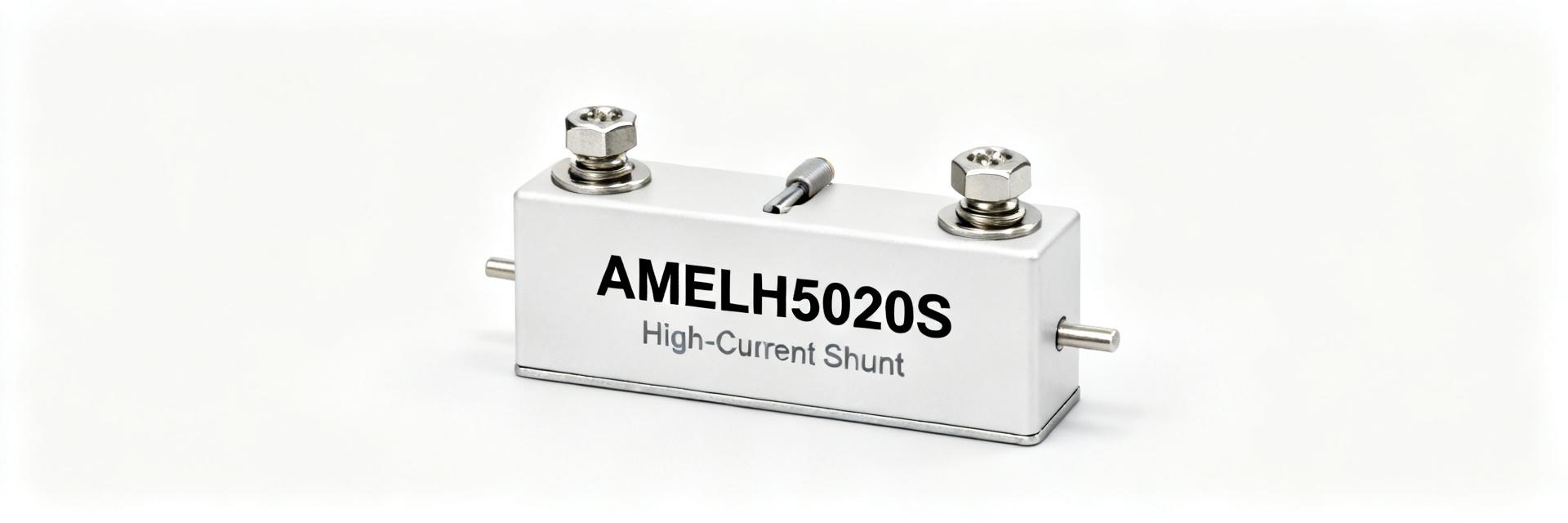
Key datasheet specs to extract and compare
Point: Extracting exact datasheet items is the first gate: DC resistance (Rdc), tolerance, temperature coefficient (TCR), rated continuous current, power/thermal limits, package/mounting, maximum temperature, and mechanical specs. Evidence: Low Rdc lowers I2R loss; tight tolerance and low TCR preserve sensing accuracy as temperature changes. Explanation: When you pick AMELH5020S-1R0MT, use those fields to predict voltage drop and heating, and compare to system limits—prioritize Rdc, continuous current rating, and thermal resistance for high-current rails.
Typical application roles and constraints
Point: Parts like this serve as precision shunts for current sensing, in-rush limiters, or distribution resistors, each role imposing different constraints. Evidence: Current-sense roles demand low Rdc with tight tolerance/TCR and Kelvin pads; power-dissipation roles accept higher drop but require thermal mass. Explanation: Decide early whether accuracy or low insertion loss matters most; for AMELH5020S-1R0MT for current sensing on PC power rails, ensure voltage-drop budget and amplifier input range permit the chosen Rdc at peak current.
2 — Quantitative selection criteria: losses, temperature rise, and derating
| Parameter | Formula / Metric | System Impact |
|---|---|---|
| Power Dissipation | P = I² × R | Thermal Budget |
| Voltage Drop | Vdrop = I × R | Rail Efficiency |
| Temp Rise | ΔT = P × θJA | Component Reliability |
Calculate I^2R losses, voltage drop, and power dissipation
Point: Use simple formulas to size losses: P = I^2 * R, Vdrop = I * R. Evidence: For example template: let I = __ A, R = __ mΩ (enter as 0.001 × R Ω), then P (W) = I^2 × R(Ω); Vdrop (V) = I × R(Ω). Explanation: Compute percent loss relative to rail voltage: %loss = (P / (Vrail × I)) × 100. For high-current rails this quantifies wasted power and informs whether the shunt remains practical within thermal and efficiency targets.
Thermal limits and derating rules
Point: Translate dissipated power into temperature rise via package thermal resistance or empirical charts and apply derating. Evidence: If θJA or thermal plane area is known, ΔT = P × θJA; add ambient to estimate junction or case temperature. Explanation: Apply derating factors—example: continuous loads use 60–80% of rated current; intermittent bursts may use 100–120% for short duty. Increase margin with higher ambient or constrained convection to avoid drift and solder fatigue.
3 — PCB layout and thermal management best practices
Copper sizing, via strategy, and current carrying paths
Point: Transfer current away from the shunt using wide, short copper and multiple vias to spread resistance and heat. Evidence: Use IPC-style trace ampacity guidance as a baseline, then double width or add parallel traces for sustained high current; add 6–12 vias (as practical) under thermal pad to reduce via resistance. Explanation: Lower loop resistance by minimizing path length, using thicker copper (2–4 oz) or paralleling traces, and clustering vias to heat-spread into internal planes—these steps reduce IR-drop and peak temperature.
Mechanical mounting, thermal pads, and heat-spreading techniques
Point: Mechanical attachment and exposed pads are critical to thermal performance and measurement integrity. Evidence: Place the shunt close to the load or amplifier ground reference, provide thermal planes on adjacent layers, and connect exposed pads with large copper pours. Explanation: Use Kelvin sense pads routed to the amplifier, avoid routing noisy signals over sense traces, and consider paralleling resistors or adding a clip-on heatsink when PCB area is constrained to lower temperature rise.
4 — Test, measurement and validation on the bench
How to measure Rdc and thermal behavior under load
Point: Validate Rdc and heating with a controlled test plan: four-wire resistance, controlled current source, and temperature logging. Evidence: Measure Rdc at low current with a 4-wire meter, then step to target currents while logging Vdrop and surface temperature via thermocouple or IR camera until steady state. Explanation: Capture transient and steady-state behavior, note drift vs. time and temperature, and record acceptable drift tolerances for acceptance (example: <1% drift over 1 hour for sensing applications).
Failure modes, long-term reliability checks and qualification
Point: Anticipate solder fatigue, thermal cycling drift, and overload-induced shifts. Evidence: Run accelerated thermal cycling, high-current soak, and repeated power-on in a fixture to reveal solder joint wear and Rdc drift. Explanation: Define pass/fail criteria—maximum Rdc change, no open circuits, temperature below solder reflow limits—and document time-to-failure data for production acceptance and expected lifetime under typical duty cycles.
5 — Final pick checklist, trade-offs and alternatives
Step-by-step selection checklist
- Confirm Rdc and allowable voltage drop at target current; compute insertion loss vs. efficiency budget.
- Compute steady-state power and temperature rise using P = I^2R and estimated θJA; apply derating factors for ambient and duty cycle.
- Validate package and PCB thermal plan: copper area, via count, and thermal planes to keep ΔT within spec.
- Plan for measurement accuracy: tolerance and TCR, plus Kelvin layout to isolate sense leads from high-current paths.
- Bench-verify with four-wire resistance and thermal soak tests; record drift and failure modes.
- Document acceptance criteria and apply final derating before release.
Trade-offs and when to pick alternatives
Point: Trade-offs center on Rdc versus cost and thermal budget; alternatives include active current-sense ICs or Hall sensors. Evidence: Lower Rdc reduces loss but increases part cost and may reduce measurable Vdrop for amplifiers; paralleling shunts reduces Rdc but complicates layout and balance. Explanation: Choose alternatives when insertion loss is unacceptable, when isolation or non-invasive sensing is required, or when thermal dissipation cannot be resolved on the PCB.
Summary & Action Plan
Point: Successful deployment of the AMELH5020S-1R0MT on high-current rails requires checking Rdc/tolerance/TCR, calculating I2R losses and derating, implementing PCB thermal design, and verifying on the bench with four-wire and thermal tests. Evidence: Following the checklist reduces surprises in production and shortens debug cycles. Explanation & CTA: Run the checklist and bench verification before release to confirm performance in your target environment.
- Confirm required Rdc and allowable Vdrop against rail efficiency goals.
- Design robust PCB thermal paths: wide copper, multiple vias, and thermal planes.
- Perform four-wire Rdc checks and thermal soak tests; document drift.
FAQ
How do I measure the Rdc of AMELH5020S-1R0MT accurately?
Use a four-wire (Kelvin) resistance measurement at low current for baseline Rdc, then verify at operating currents by measuring Vdrop with a calibrated source and high-precision voltmeter. Log temperature and correct readings for TCR to ensure the value reflects expected in-situ conditions.
What derating should I apply for continuous high-current rails with AMELH5020S-1R0MT?
Apply conservative derating: limit continuous current to 60–80% of rated continuous current when ambient or airflow is limited. For intermittent duty, allow higher short-term currents with verified thermal soak tests and documented temperature limits to prevent drift or solder fatigue.
When is an active current-sense IC better than using AMELH5020S-1R0MT?
Choose an active current-sense IC or Hall-effect sensor when you need galvanic isolation, very low insertion loss with amplification, or complex filtering and diagnostics not feasible with a passive shunt. Active solutions reduce layout sensitivity but add cost and supply requirements.